The $50 Filet I Couldn’t Stop Thinking About
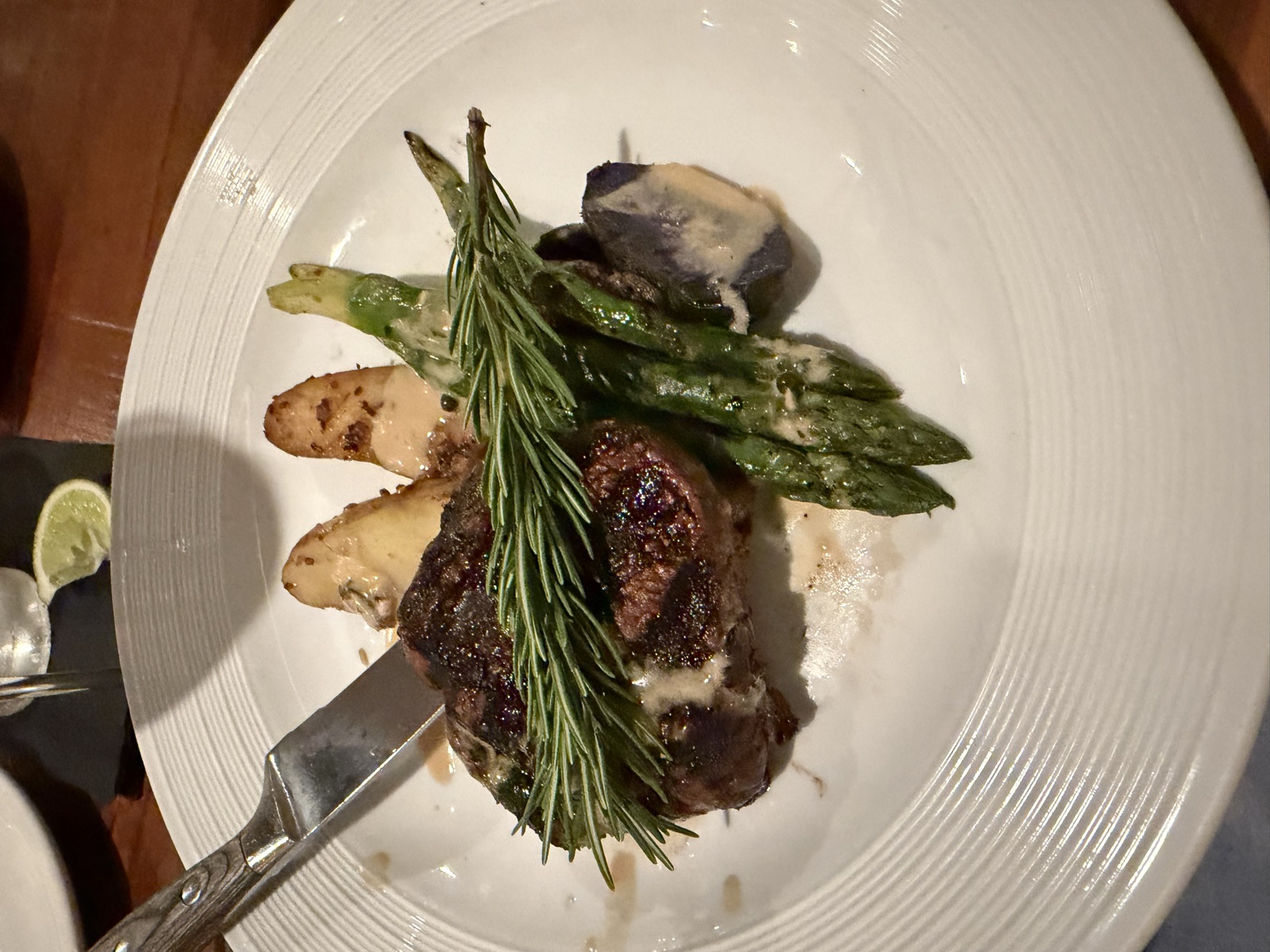
My wife and I took an early birthday/wedding anniversary trip to St. Augustine, Florida last month. Our first night, we had dinner at River & Fort — right on the water, the kind of place where the menu is short, everything costs money, and you’re okay with that.
I ordered the hand-cut filet. Duck-fat fingerling potatoes. Cognac peppercorn sauce. It was $50 for one steak and I did not regret a single dollar.
What I couldn’t stop thinking about on the drive home was that the technique behind it — cognac, cream, cracked peppercorns, a sauce built by deglazing — is essentially steak au poivre, a French classic that’s been on bistro menus for over a hundred years.
I recreated it at home a week later. Bought 8 filets from Costco for around $130 — roughly $16 a steak. The restaurant charges $50 for one. The gap between what you pay and what you actually eat is, as always, entirely closeable at home.
What Makes This Healthier?
Let me be honest with you upfront: this is not a low-calorie dish. It’s a rich steakhouse plate made with real cream, real butter, and real tallow, and it tastes exactly like that. If you’re tracking calories, budget accordingly.
What it does have going for it:
Filet mignon is one of the leanest steak cuts. For how much flavor it carries, the fat content is genuinely low. Compare it to ribeye or a New York strip and the protein-to-fat ratio is significantly better. You’re getting a lot of protein per bite.
The fats here are whole-food animal fats. Beef tallow, unsalted butter, avocado oil — nothing from a jug with a partial hydrogenation warning. Industrial seed oils (canola, soybean, corn) break down under high heat and produce compounds you’d rather not eat. Tallow and avocado oil don’t have that problem.
You control the sodium. At the restaurant, the sauce comes out of a 12-quart batch prepared earlier that day and seasoned by the line — you have no idea what went in. Here, the stock is low-sodium, the marinade is discarded before cooking, and you season to your preference. The 650mg estimate above is honest; it’s not low-sodium, but it’s well under what a restaurant plate would deliver.
Real ingredients, no shortcuts. The cream sauce is heavy cream, cognac, beef stock, cracked peppercorns, shallot, and butter. That’s it. No gums, no cornstarch, no modified food starch that restaurant sauces often use to stabilize at scale.
That’s the honest case. Better ingredients, made with intention.
Instructions
Marinade (Start 4–24 Hours Ahead)
-
Build the marinade. Whisk together the olive oil, cognac, Worcestershire, soy sauce, and Dijon until emulsified. Add the smashed garlic, sliced shallots, bruised thyme, bruised rosemary, bay leaves (for 24-hour only — skip for 4-hour), cracked peppercorns, and kosher salt. Stir to combine.
-
Bag the filets. Place the steaks in a gallon zip-top bag. Pour the marinade over them. Press out as much air as you can, seal, and lay the bag flat in the refrigerator.
-
Marinate. For 24-hour: marinate the full time, flipping the bag at the 12-hour mark. For 4-hour: marinate 3.5 hours in the fridge, then pull 30 minutes before cooking to come to room temperature.
-
Reserve the aromatics. When you remove the steaks from the bag, fish out the garlic cloves, herb sprigs, and any shallot pieces. Set them aside — they go into the pan during the butter baste. Discard the marinade liquid entirely. It contacted raw beef.
Cognac Peppercorn Sauce (Build 30–45 Min Before Serving)
-
Toast the peppercorns. In a small saucepan or skillet, melt 1 tablespoon of butter over medium heat. Add the cracked peppercorns and toast, stirring, for 1 minute. They’ll bloom and turn fragrant.
-
Sweat the aromatics. Add the minced shallot and cook 2–3 minutes until soft and translucent. Add the minced garlic and cook 30 seconds more.
-
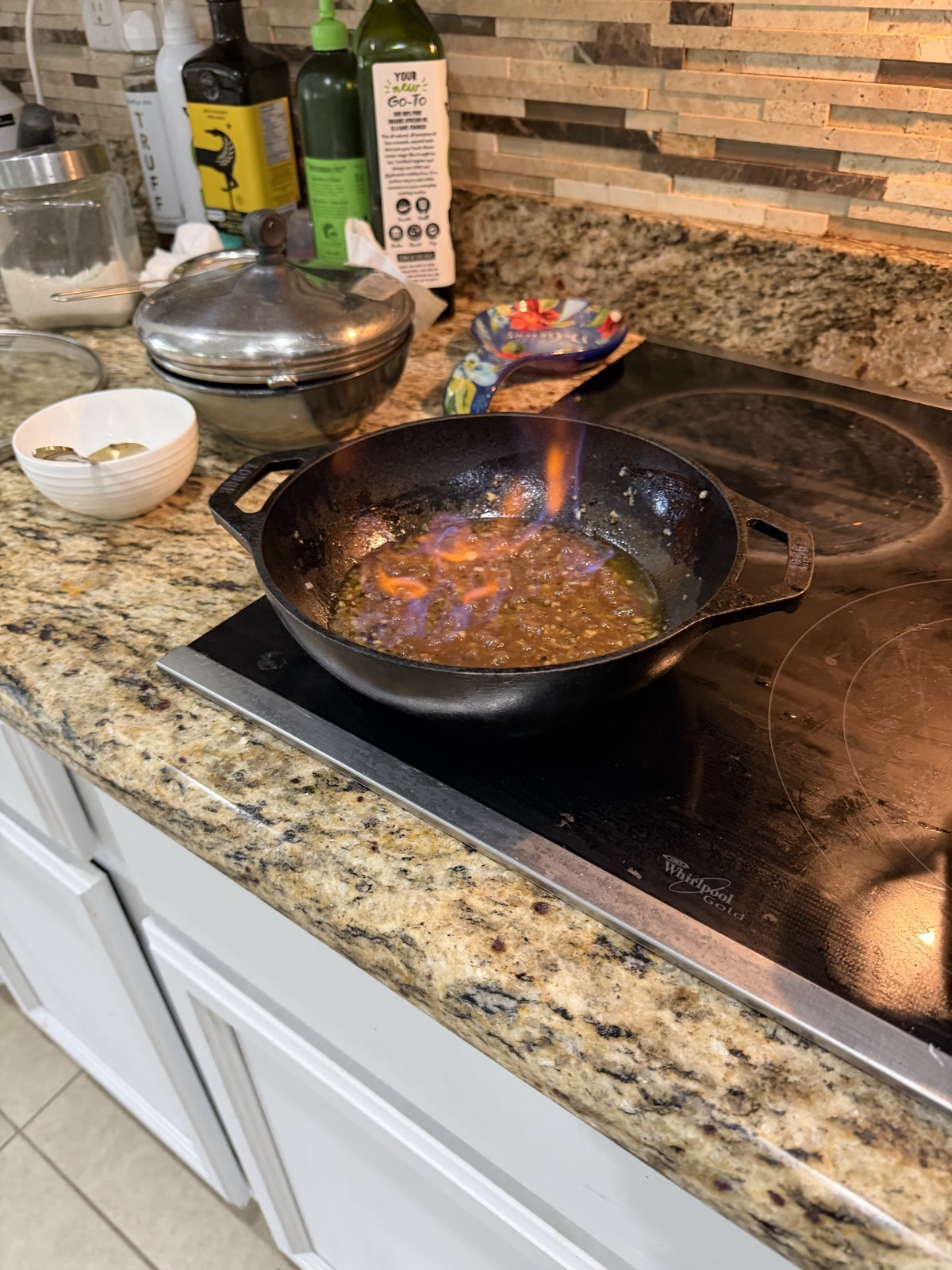
Add the cognac. Pull the pan off the heat. Pour in the cognac. Return to medium-high heat and either carefully tilt the pan to flambe, or let it simmer hard for 1–2 minutes to cook off the alcohol.
-
Build the sauce. Pour in the beef stock. Simmer 5–7 minutes, stirring occasionally, until it reduces by about half and coats the back of a spoon.
-
Finish with cream. Stir in the heavy cream, Dijon, and Worcestershire. Drop to a gentle simmer — never let it boil hard or the cream will break. Cook 3–5 minutes until the sauce coats the spoon (nappe consistency). Taste and adjust salt.
-
Mount with butter. Pull off heat. Swirl in the final tablespoon of cold butter until incorporated. This gives the sauce its gloss. Hold on the lowest possible heat until service.
-
After the steak sear (pro move). Once you’ve seared the filets, the cast iron has a layer of fond and herbed tallow at the bottom. Pull the pan off heat, add 2 tablespoons of cognac, scrape the fond, and reduce 30 seconds over medium. Pour that directly into your sauce. This is where the restaurant depth comes from.
Tallow-Roasted Fingerling Potatoes
-
Par-boil. Put the fingerlings in a pot of cold, generously salted water. Bring to a boil, then drop to a simmer. Cook 8–10 minutes — you want a knife to slide in with just a little resistance. Not soft, not crunchy. Drain.
-
Steam-dry. Spread the drained potatoes on a clean kitchen towel or sheet pan and leave them undisturbed for 5–10 minutes. This step is critical. Moisture is the enemy of a good crust; let the surface dry completely.
-
Sear cut-side down. Melt the tallow in a cast iron skillet over medium-high heat until shimmering. Place the potato halves cut-side down in a single layer. Do not touch them for 5–7 minutes until deeply golden and releasing on their own.
-
Finish in the oven. Add the smashed garlic, thyme sprigs, and rosemary to the pan. Transfer the whole skillet to a 425°F oven for 10–15 minutes, tossing once halfway through.
-
Season and serve. Pull from the oven, discard the herb sprigs, and finish with flaky sea salt, cracked pepper, and chopped parsley while still hot. Reserve the herbed tallow left in the pan — strain it into a small jar, refrigerate, and use it within a few weeks for eggs or roasted vegetables.
Filet Mignon (Reverse Sear)
-
Pull and dry. Remove the filets from the marinade bag 45–60 minutes before cooking. Set them on a wire rack. Pat completely dry with paper towels — this is the most important single step. A wet surface will steam instead of sear.
-
Season. Hit both sides with fresh kosher salt and cracked black pepper. Insert an instant-read or oven-safe thermometer into the thickest part of the largest steak.
-
Low oven. Set the rack over a sheet pan. Place in a 250°F oven. Roast until the internal temperature reads 115°F — roughly 35–45 minutes for a 2–2.5 inch thick filet.
-
Rest, then sear. Pull from the oven and rest uncovered for 5–10 minutes while you heat a cast iron skillet over the highest heat your stove allows. The pan should be well beyond smoking when you add the tallow.
-
Hard sear. Add the beef tallow and lay the filets in the pan. Sear 60–90 seconds per side without moving them. Stand them on their edge and hit each side for 30 seconds.
-
Butter baste. On the final 60 seconds: add the butter and the reserved garlic cloves and herb sprigs from the marinade. Tilt the pan and baste the tops of the steaks continuously with the foaming butter.
-
Pull and rest. Remove the filets when they read 130–135°F internal. Rest on a cutting board, uncovered, for 5 minutes. They’ll carry over to 140–145°F (medium). Do not tent — tenting steams the crust.
Charred Garlic Asparagus
-
Prep. Snap or trim the woody ends. Rinse and pat completely dry.
-
Rip-hot pan. Heat a cast iron skillet or grill pan over medium-high to high heat for 2–3 minutes until lightly smoking.
-
Char. Add the tallow or avocado oil and the smashed garlic. Lay the asparagus in a single layer, season with salt and pepper, and don’t move them for 2–3 minutes. Turn and char the other side for another 2–3 minutes. You want char marks, not steamed green sticks.
-
Finish. Off heat, squeeze the half lemon over the asparagus and hit with flaky sea salt and cracked pepper.
Plating
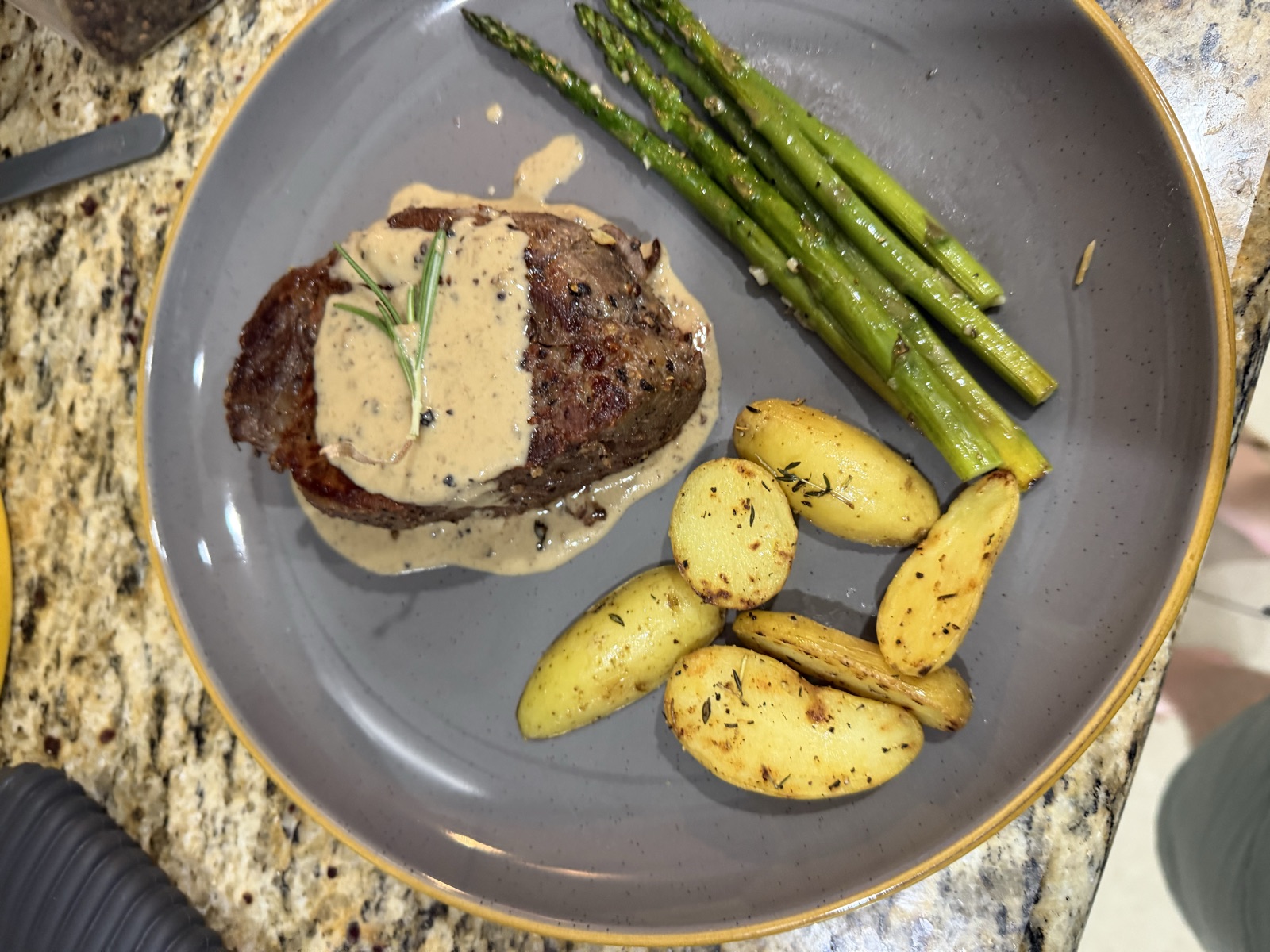
Pool a few tablespoons of sauce on a warm plate. Set the filet in the center of the sauce. Tuck 4–5 fingerling halves behind the steak. Lay 3–4 asparagus spears beside it and add a small additional drizzle of sauce across the spears. Spoon the herbed butter from the sear pan over the top of the filet. Finish with a fresh rosemary sprig laid across the steak — it’s the move that makes it look like it came out of a kitchen that knows what it’s doing.
Master Timing
This dish has five components. The table below assumes T-0 is when you sit down. Read it bottom-up on the day of.
| Time | Task |
|---|---|
| T-24h | Build marinade, bag filets, refrigerate |
| T-12h | Flip the bag (24-hour path only) |
| T-4h | Build marinade, bag filets, refrigerate (4-hour path only) |
| T-75 min | Par-boil potatoes, steam-dry on towel |
| T-60 min | Start cognac peppercorn sauce |
| T-50 min | Sauce at reduction stage; pat filets dry, season, insert thermometer |
| T-45 min | Sauce finished and holding on lowest heat; filets into 250°F oven on rack |
| T-25 min | Heat tallow in cast iron; sear potatoes cut-side down, don’t touch |
| T-18 min | Potatoes into 425°F oven (if one oven: pull filets first at 115°F, tent loosely, crank heat) |
| T-15 min | Check filet temp; pull at 115°F, rest uncovered on board |
| T-10 min | Pull potatoes, flaky salt, tent loosely to hold; heat second cast iron for sear |
| T-7 min | Char asparagus |
| T-5 min | Hard sear filets + butter baste with reserved aromatics; deglaze pan into sauce |
| T-2 min | Rest filets on board |
| T-0 | Plate and serve |
How Do I Store Leftovers?
Refrigerate the filet, potatoes, and asparagus separately in airtight containers for up to 3 days. Store the sauce in its own container — it will thicken as it cools, which is normal.
To reheat the steak: low oven at 250°F for 10–12 minutes, then a quick 30-second hit in a hot dry skillet to revive the crust. Do not microwave it — you’ll have a grey, chewy, expensive mistake.
Rewarm the sauce over low heat, stirring occasionally. If it’s too thick, loosen with a splash of beef stock or a tablespoon of cream. Whisk it back together if it looks like it’s broken — or whisk in one tablespoon of cold cream off the heat.
Potatoes reheat well in a 425°F oven for 8–10 minutes on a sheet pan. The asparagus is best eaten same-day; reheated asparagus loses the char and goes limp.
Cook’s Notes
-
One-oven workaround. The reverse sear runs at 250°F; the potatoes want 425°F. If you only have one oven, reverse sear the filets first (they have the longer window), pull them at 115°F and tent loosely while you crank the oven to 425°F for the potatoes. The filets will hold fine for 10–15 minutes under a loose foil tent while the oven temperature climbs.
-
Discard the marinade. The bag marinade contacted raw beef for hours. It does not get repurposed into the sauce, no matter how good it smells. The reserved garlic and herb sprigs you pulled out before the bag are fine to use in the butter baste — they were just aromatic passengers.
-
Save the herbed tallow. After the potato roast, the cast iron has seasoned, herb-and-garlic-infused tallow at the bottom. Strain it through a fine mesh strainer into a small jar while it’s still warm. Let it cool, then refrigerate. It keeps for several weeks and is excellent for roasting vegetables or frying eggs. Strain it again after each use.
-
The sauce holds. Once finished, the cognac peppercorn sauce will hold beautifully on the lowest heat setting for 30–45 minutes. Stir it every few minutes and loosen with a splash of stock or cream if it tightens. If it breaks, pull off heat and whisk in one tablespoon of cold cream — it’ll come back together.
-
4-hour vs. 24-hour honesty. The 4-hour marinade is genuinely excellent. The 24-hour is incrementally better — a little more depth, slightly more tender — but not so dramatically different that you should skip the dish because you don’t have a full day. If it’s 3pm and dinner is at 7pm, make the dish.
-
No acid in the marinade. Unlike citrus-based or vinegar-heavy marinades that can break down protein texture, this marinade has no strong acid. Even at 24 hours, the filet texture will be intact. No mushiness risk.
Health Swap
Beef tallow is a whole-food rendered animal fat with a high smoke point (~400–420°F) and no industrial seed oils. Avocado oil runs around 500°F smoke point, so it sears clean without scorching. To be straight with you: tallow is comparable to duck fat in fat profile — actually slightly higher in saturated fat — so this isn't a dramatic calorie win. The real case for tallow is pantry practicality, avoiding refined seed oils, and the fact that it produces a deeply golden sear. It's the honest choice, not the marketing one.
Get Healthier Recipes Weekly
New recipes with Health Swaps, nutrition data, and the stories behind them.
Filet Mignon with Cognac Peppercorn Sauce
Ingredients
Instructions
- 1Build the marinade.
Whisk together the olive oil, cognac, Worcestershire, soy sauce, and Dijon until emulsified. Add the smashed garlic, sliced shallots, bruised thyme, bruised rosemary, bay leaves (for 24-hour only — skip for 4-hour), cracked peppercorns, and kosher salt. Stir to combine.
- 2Bag the filets.
Place the steaks in a gallon zip-top bag. Pour the marinade over them. Press out as much air as you can, seal, and lay the bag flat in the refrigerator.
- 3Marinate.
For 24-hour: marinate the full time, flipping the bag at the 12-hour mark. For 4-hour: marinate 3.5 hours in the fridge, then pull 30 minutes before cooking to come to room temperature.
- 4Reserve the aromatics.
When you remove the steaks from the bag, fish out the garlic cloves, herb sprigs, and any shallot pieces. Set them aside — they go into the pan during the butter baste. Discard the marinade liquid entirely. It contacted raw beef.
- 5Toast the peppercorns.
In a small saucepan or skillet, melt 1 tablespoon of butter over medium heat. Add the cracked peppercorns and toast, stirring, for 1 minute. They'll bloom and turn fragrant.
- 6Sweat the aromatics.
Add the minced shallot and cook 2–3 minutes until soft and translucent. Add the minced garlic and cook 30 seconds more.
- 7Add the cognac.
Pull the pan off the heat. Pour in the cognac. Return to medium-high heat and either carefully tilt the pan to flambe, or let it simmer hard for 1–2 minutes to cook off the alcohol.
- 8Build the sauce.
Pour in the beef stock. Simmer 5–7 minutes, stirring occasionally, until it reduces by about half and coats the back of a spoon.
- 9Finish with cream.
Stir in the heavy cream, Dijon, and Worcestershire. Drop to a gentle simmer — never let it boil hard or the cream will break. Cook 3–5 minutes until the sauce coats the spoon (nappe consistency). Taste and adjust salt.
- 10Mount with butter.
Pull off heat. Swirl in the final tablespoon of cold butter until incorporated. This gives the sauce its gloss. Hold on the lowest possible heat until service.
- 11After the steak sear (pro move).
Once you've seared the filets, the cast iron has a layer of fond and herbed tallow at the bottom. Pull the pan off heat, add 2 tablespoons of cognac, scrape the fond, and reduce 30 seconds over medium. Pour that directly into your sauce. This is where the restaurant depth comes from.
- 12Par-boil.
Put the fingerlings in a pot of cold, generously salted water. Bring to a boil, then drop to a simmer. Cook 8–10 minutes — you want a knife to slide in with just a little resistance. Not soft, not crunchy. Drain.
- 13Steam-dry.
Spread the drained potatoes on a clean kitchen towel or sheet pan and leave them undisturbed for 5–10 minutes. This step is critical. Moisture is the enemy of a good crust; let the surface dry completely.
- 14Sear cut-side down.
Melt the tallow in a cast iron skillet over medium-high heat until shimmering. Place the potato halves cut-side down in a single layer. Do not touch them for 5–7 minutes until deeply golden and releasing on their own.
- 15Finish in the oven.
Add the smashed garlic, thyme sprigs, and rosemary to the pan. Transfer the whole skillet to a 425°F oven for 10–15 minutes, tossing once halfway through.
- 16Season and serve.
Pull from the oven, discard the herb sprigs, and finish with flaky sea salt, cracked pepper, and chopped parsley while still hot. Reserve the herbed tallow left in the pan — strain it into a small jar, refrigerate, and use it within a few weeks for eggs or roasted vegetables.
- 17Pull and dry.
Remove the filets from the marinade bag 45–60 minutes before cooking. Set them on a wire rack. Pat completely dry with paper towels — this is the most important single step. A wet surface will steam instead of sear.
- 18Season.
Hit both sides with fresh kosher salt and cracked black pepper. Insert an instant-read or oven-safe thermometer into the thickest part of the largest steak.
- 19Low oven.
Set the rack over a sheet pan. Place in a 250°F oven. Roast until the internal temperature reads 115°F — roughly 35–45 minutes for a 2–2.5 inch thick filet.
- 20Rest, then sear.
Pull from the oven and rest uncovered for 5–10 minutes while you heat a cast iron skillet over the highest heat your stove allows. The pan should be well beyond smoking when you add the tallow.
- 21Hard sear.
Add the beef tallow and lay the filets in the pan. Sear 60–90 seconds per side without moving them. Stand them on their edge and hit each side for 30 seconds.
- 22Butter baste.
On the final 60 seconds: add the butter and the reserved garlic cloves and herb sprigs from the marinade. Tilt the pan and baste the tops of the steaks continuously with the foaming butter.
- 23Pull and rest.
Remove the filets when they read 130–135°F internal. Rest on a cutting board, uncovered, for 5 minutes. They'll carry over to 140–145°F (medium). Do not tent — tenting steams the crust.
- 24Prep.
Snap or trim the woody ends. Rinse and pat completely dry.
- 25Rip-hot pan.
Heat a cast iron skillet or grill pan over medium-high to high heat for 2–3 minutes until lightly smoking.
- 26Char.
Add the tallow or avocado oil and the smashed garlic. Lay the asparagus in a single layer, season with salt and pepper, and don't move them for 2–3 minutes. Turn and char the other side for another 2–3 minutes. You want char marks, not steamed green sticks.
- 27Finish.
Off heat, squeeze the half lemon over the asparagus and hit with flaky sea salt and cracked pepper.
Nutrition Facts
Per serving (serves 4)
| Nutrient | Amount |
|---|---|
| Calories | 1060 |
| Protein | 54g |
| Carbohydrates | 40g |
| Fat | 76g |
| Sodium | 800mg |
| Fiber | 6g |
| Sugar | 4g |